
CASE STUDY · PRIZE CONTESTS · 2016 LAUNCH, 2026 REVISIT
Winnr: prize contests people can understand and trust
Winnr was a prize-pool contest app and website I designed for its 2016 launch. In 2026 I looked at it as a whole product: clear rules, fair play, honest use of data, and an entry you can follow from ticket to result.
6 MIN READ
At a glance
- My role
- Designer of the app and the website for the 2016 launch. Designer of the 2026 revisit.
- When
- 2016 launch · 2026 revisit
- What I did
- Made the mechanics readable, kept the entry, the receipt and the result apart, and designed offers and data use people choose to opt into.
- Shown on
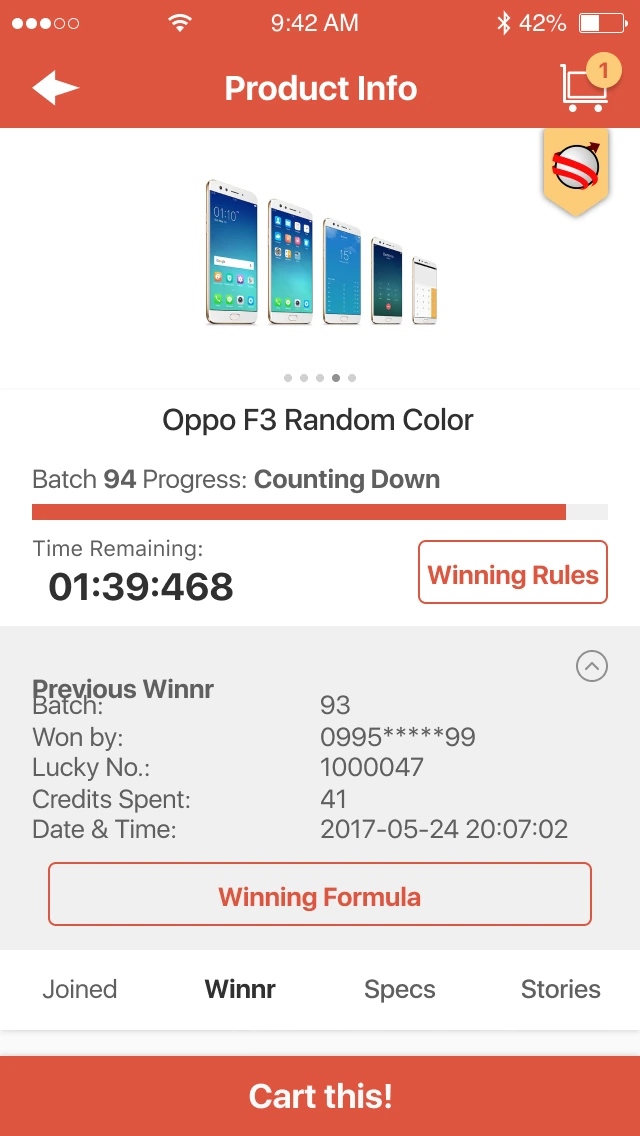
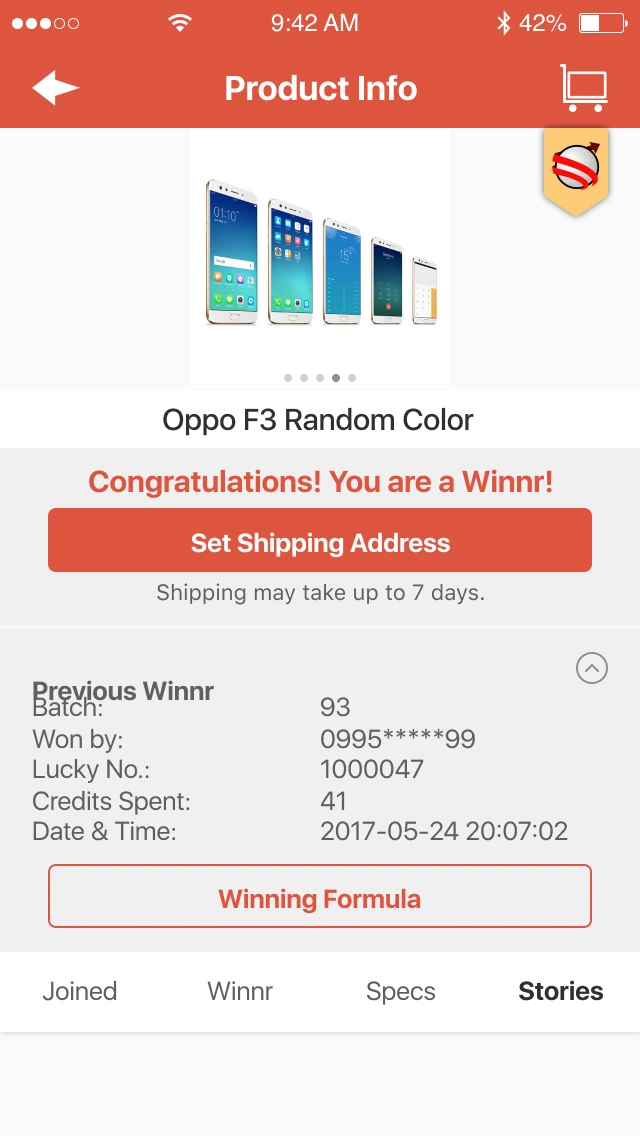
- The original screens (captured in 2017), and 2026 concept screens with sample data and no payments.
- Next
- Test whether people can tell a receipt from a result, and whether the terms are clear before they enter.
01 · THE PRODUCT
Winnr turned prize pools into a full product: contests, tickets, coins and a store.
The brief combined four things that all had to make sense together. People join contests with tickets, earn and spend coins, and pick prizes from a store, on the app and the website.
02 · THE PROBLEM
If people can't follow the rules, a fair result can still feel unfair.
Four connected mechanics are a lot to keep in your head. When the terms aren't clear, people stop trusting the draw, even when it's fair. So the revisit starts there: make the mechanics readable before making them exciting.
03 · CONSTRAINTS
Prize promotions are regulated, and so is personal data.
In the Philippines, a prize promotion needs a DTI sales-promotion permit. Promo materials carry the permit number, and draws are supervised by a DTI representative.
Personal data falls under the Data Privacy Act of 2012, where consent has to be freely given, specific and informed.
Designing Winnr today means designing for both from the first screen.
04 · WHAT I LOOKED AT
Six apps showed how to make waiting, winning and consent feel clear.
DoorDash puts the countdown and "Terms apply" side by side. Google Pay names a real deadline instead of a fake timer. Chipotle keeps a plain receipt apart from the status that follows, and asks about rewards and offers as separate opt-ins with nothing pre-selected. Whatnot confirms, says what happens next, and explains why before asking for notifications.

05 · ENTRY, RECEIPT, RESULT
An entry, a receipt and a result are different things, so each gets its own screen.
Choose an entry, keep the receipt, then read the result. A receipt says "received, the result comes later". It never reads like a loss.
06 · OFFERS PEOPLE ACTUALLY WANT
Offers follow what people want, not pressure.
Many people wait for a deal instead of paying full price. Winnr can learn which prizes and bundles someone keeps coming back to, and bring those forward at a price that feels fair. Every offer says why it's showing up, and none uses fake urgency.
07 · DATA, BY CHOICE
Personalisation is opt-in, and people can see what it uses.
Offers based on behaviour only switch on if someone says yes, after a plain explanation of what's collected and why. Turning it off is as easy as turning it on. The contest terms and draw dates sit one tap from every entry.
08 · WHAT I'D DO NEXT
Next, I'd test whether people can tell a receipt from a result.
I'd also check that the terms are understood before someone enters, and that the opt-in explanation is actually read, not just accepted.